Showing posts with label lifestyle. Show all posts

3 Mar 2019

Barcelona - Palau Güell

Short description:

Palau Güell was designed by the best well-know Spanish architect Antoni Gaudi; a men who went beyond his times. It was built between 1886 and 1890. This place shows not only the essence of Gaudi's architecture but also collaboration between him and Eusebi Güell (industrialist and politician) - the first and the last Gaudi's client. Gaudi and Güell - imagination and money, this is how one of the most specific style was born.


Free entrance

Once in every month entrance to Palau Güell is free of charge, when? First Sunday of the month. Free tickets you have to pick up from ticket office, the queue is extremely long, that's why I recommend to you come before opening hours, let's say 30/40 minutes earlier. Tickets are limited and distributed for the certain hour (entrance is every half on hour), so if you're alone your chances to pick up ticket for the next entrance are bigger:) Otherwise, you will have to wait for your turn. One person can take up to 5 tickets - if you are lazy to wake up in the early morning, send your boyfriend there!! :)
Another chance to enter palace Güell for free is come on one of "open days":
> 23.04, 21.05, 11.09, 24.09, 15.12 <


Tickets are distributed:

  • from 01.11 - 31.03 -> 10:00 am - 13:30 pm and 13:30 pm - 16:30 pm
  • from 01.04 - 31.10 -> 10:00 am - 15:00 pm and 15:00 pm - 19:00 pm


Useful information:

1. On the left side behind security control (yes, you are not allowed to bring dangerous items;)) are the lockers to put your belongings and close it. A deposit of €1, which will be returned, bring a coin with you.
2. You will get a free audio guide (ES/CAT/EN/DE/FR) so easily you will discover the area. Moreover, in the attic you can watch interesting movies showing story of palace and collaboration of Gaudi and Güell.
3. Toilets are downstairs, in the corner.
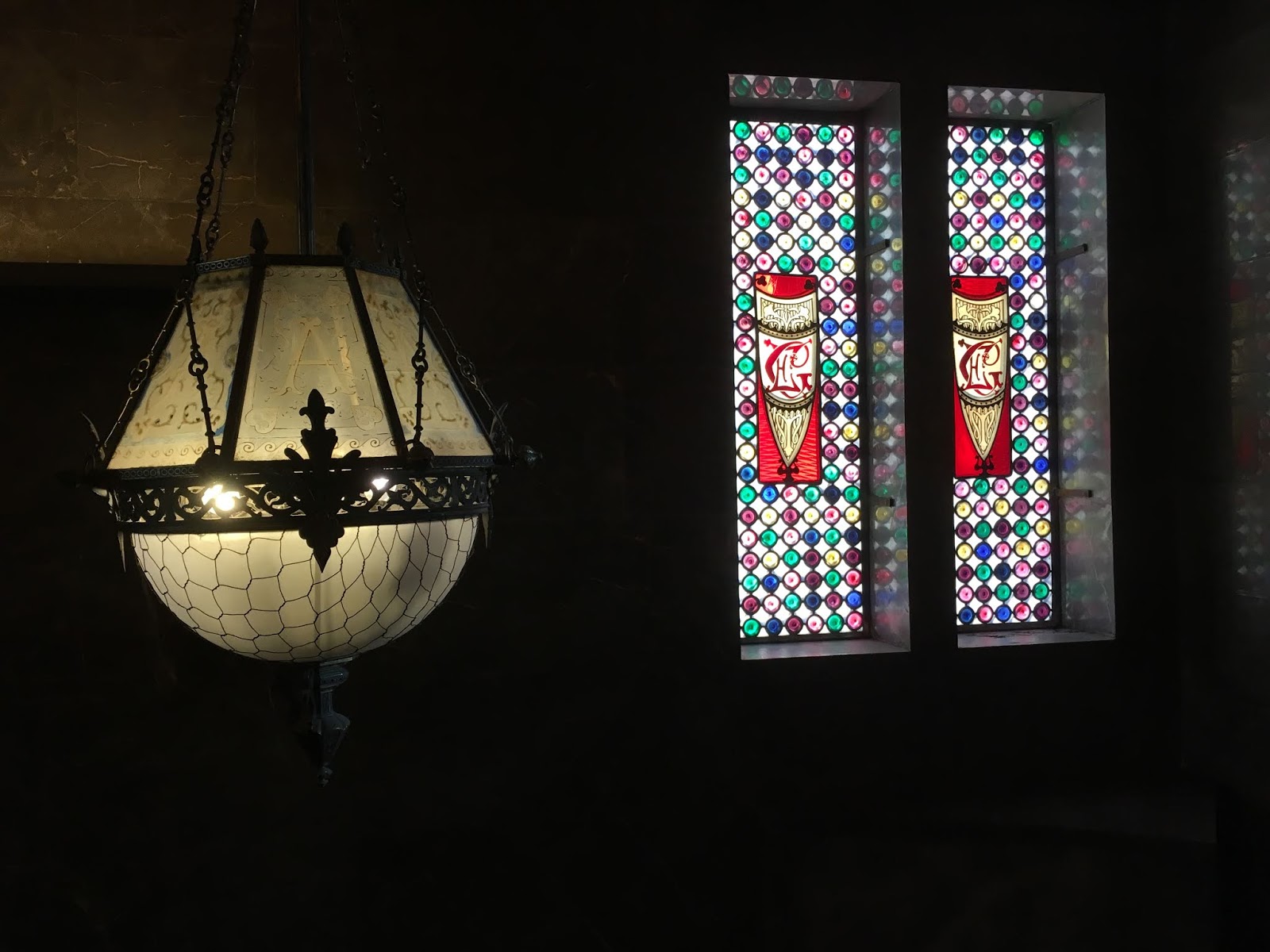
Details and amazing use of light can be seen everywhere

Coming to the roof terrace... The most spectacular combination of art and technology as well as beautiful view.

Roof terrace

Chimney without me :(
Chimney and me :)


More to explore:

Official website you will find here: Palau Güell
Address: Nou de la Rambla 3-5
How to get there: metro L3/LICEU
Read more »

Matosinhos - a big kitchen of Porto

Where the food is everywhere...

Hi, it's been a while since we wrote something. Today we want to show you one of our experience from Portugal. The town is called Matosinhos and it is famous from the huge port and street restaurants in its vicinity.


Matosinhos - a big kitchen of Porto

The food (fish and shells) is really being stored and cooked on the streets. One traffic line is appropriated by restaurants where they put theirs grills and tables for visitors. In following pictures you will see snapshots from cooking procedure, choosing the fish, preparation and cooking. We were there more there once to gain some knowledge (the food was delicious too), therefore there are pictures taken during the night and during the day too.

Let's choose a fish!

Looking good... and it is much nicer when somebody is doing the dirty wort instead of me

How much does it cost?


And finally our food is going onto the grill, look how good it looked. In the end it is very fresh, delicious and unforgettable, but quite expensive. In the evening one person can eat there for about 25€. During the lunch time (before 3p.m.) you can eat a bit cheaper, then the rates are about 15€ per person. I don't know if is really healthy if you have lot of cars driving just next to your food, which is being cooked, and later just next to your plate, but still it was worth to try.


Skewer on a plate


Cod on a plate

They usually serve fish with potatoes and onion dashed with plenty of olive oil. Bon Appetit!
Read more »

15 Feb 2017

Karlovy Vary - where the hot water springs

Main geyser on a street in Karlovy Vary

A brief story:


Karlovy Vary (Karlsbad, Carlsbad, カルロヴィ・ヴァリ) is located in western Czech Republic. It was founded in 14th century after the accidental discovery of the hot springs by the king Charles IV during his hunting in the region (the emperor at this time lived in nearby castle Loket). The town is located along the river Teplá, which from Czech means hot, as the water from springs finally always falls into this river and makes it a bit hotter than expected.

River Teplá in Karlovy Vary

The golden age of the town falls on the XVIII - XIX century, from when most of the buildings comes from. These times tourists started to visit the town and the springs, as the transportation became easier. From the second half of the XIX century rich clientele started determining the character of the society in Karlovy Vary. During this time many political and diplomatic negotiations took place in this town.

Living in a spa.


In the town there are 13 hot main mineral springs, which differs from each other by temperature and amount of minerals.  There are also about 300 smaller springs. The hottest spring is called Vřídlo, which temperature is equal 73 degrees Celsius and it rises from the depth of 2000-3000 meters. The temperature of other springs varies between 30 and 70 degrees. The water from the springs can cure metabolic disorders and/or be used for inhalations.  


Vřídlo hot spring

Read more »

19 Dec 2016

DIY - catch it, cook it, eat it: Mussels


Have you ever prepared seafood from a very beginning?

Ordinarily, people goes to shop and it's how it starts. But there are still some kind of food you can find in natural environment and we are not talking about fruits or vegetables:)
When you spent your summer vacation near the see, this can interest you for two reasons: activity and improving your cooking skills. 

Ready for recipe?

Start in the place similar to this: 
Ocean rocks during outflow


During outflow ocean reveals its bottom, where live many organisms. Mostly near the beaches they are not so big, because people kills them during accessing the water....:< But, when the outflow is really big or you are far away from crowded places you can find much bigger inhabitants of the sea. It is the same as this you can find in a shops but you just have to catch them. Mussels normally live attached to the rocks and to separate them you can use normal knife. Moreover, some of them drift in the water, because they were separated by strong flow during storm - you can also collect them, which is even easier. 


Colony of mussels on the rock

We advise you to collect only a big examples, because amount of work with small ones is incomparable with an amount of food from them. It is good to transport them in the bowl with ocean's water to keep them alive and fresh till the end...


Cleaning of mussels

Before cooking you have to thoroughly clean them. They grow in the sea attached to one place so other organisms as algae etc. can settle on them. With a knife you can clean them from other thrashes, then rinse them under cold tap water.  


Cleaned mussels

Before making a dish, you have to kill them. It seems brutal but it's not, either way all seafood you buy in shop have already been killed. To do so, you have to simply boil them, till all of them will open.


Boiling mussels


Here is my recipe for cooking them:


Ingredients:
  • 1 med-sized onion
  • 1 clove of garlic
  • 300 g of seafood
  • 1 small pepper or 1 chili
  • 2 tomatoes
  • 1/2 glass of a white wine (most preferable port wine)
  • Herbes de Provence
  • olive oil
  • juice of 1/2 lemon


Procedure:

Fry onion and garlic on a pan (using olive oil) till gold. Add chili/pepper and fry a bit, put on the pan chopped tomatoes. Add salt, pepper, minced pepper and Herbes de Provence (I used only some of them: oregano and rosmarin). When tomatoes are done, put the seafood. After 5 mins pour it with the white wine and lemon juice. Cook it for next 5 mins. Serve with rice or chips.   

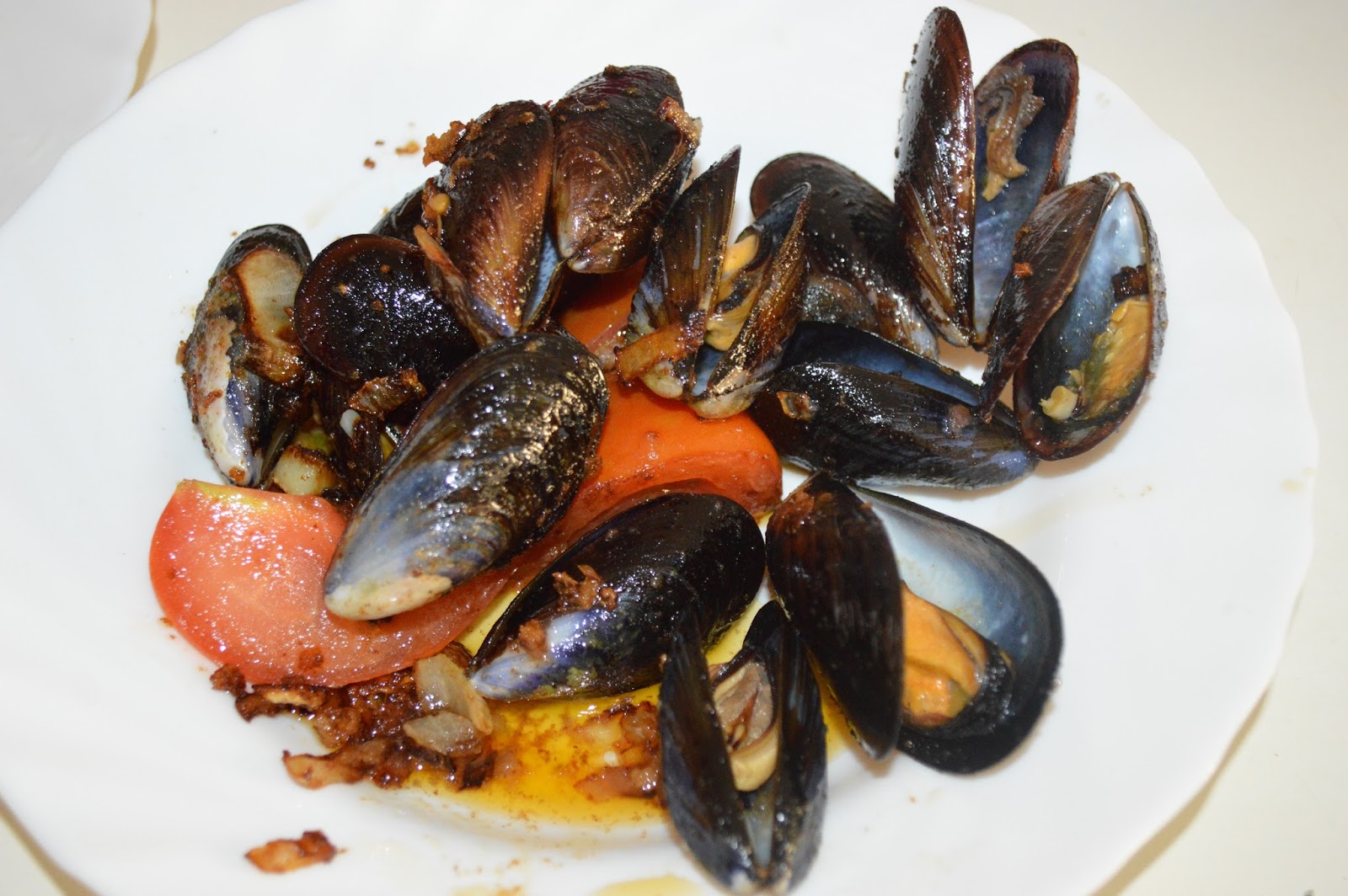
Mussels on a plate

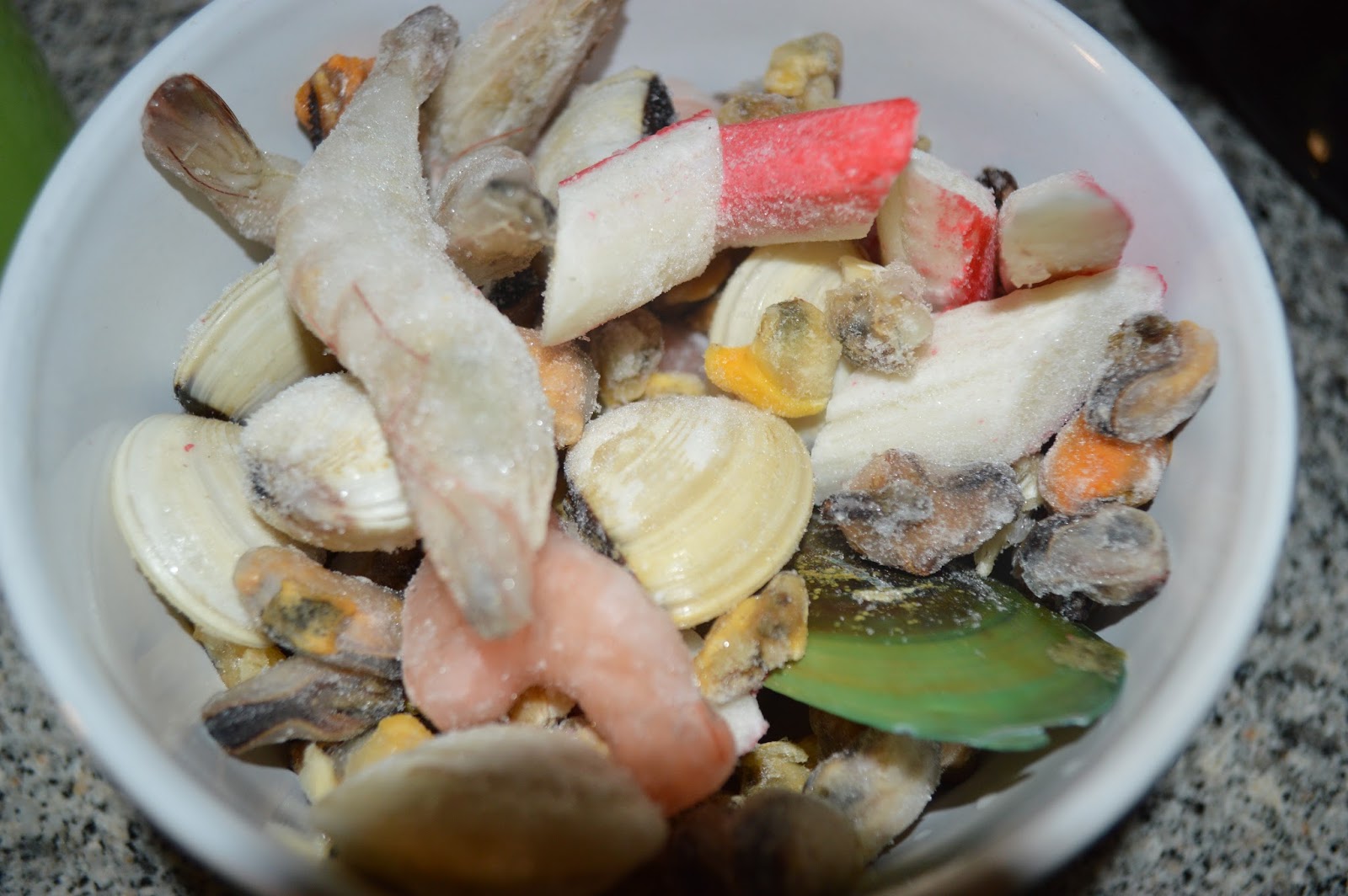
If you are not on the sea cost, you can do this food also, just buy some frozen seafood and do it same way. It always turns out good.


Mixture of frozen seafood


Serving suggestion

Bon Appetit!

Read more »

20 Sept 2016

Herzlich willkommen to Germany!


Germany - one of the well-known Central European country, with the capital in Berlin.
An total area ca. 357,2 km^2. There you can find sea, mountains, rivers, abandoned castles, UNESCO World Heritage Monuments, characteristic architecture, traditional villages, mysterious towns, huge cities, fast highways and many, many more...


Germany consists of 16 regions (ger. Länder) which are: 


from: www.viewsoftheworld.net
  • Baden-Württemberg (capital Stuttgart)
  • Bavaria (capital Munich)
  • Berlin (capital Berlin)
  • Brandenburg (capital Potsdam)
  • Bremen (capital Bremen)
  • Hamburg (capital Hamburg)
  • Hesse (capital Wiesbaden)
  • Mecklenburg-Vorpommern (capital Schwerin)
  • Lower Saxony (capital Hanover)
  • North Rhine-Westphalia (capital Düsseldorf)
  • Rhineland-Palatine (capital Mainz)
  • Saarland (capital Saarbrücken)
  • Saxony (capital Dresden)
  • Saxony-Anhalt (capital Magdeburg)
  • Schleswig-Holstein (capital Kiel)
  • Thuringia (capital Erfurt)


We felt in love with one of them, Bavaria. For some time we are exploring this region, meeting and experiencing its culture, architecture and habits.
And now we want to share with you first 6 steps which you should do if you want to live in Germany.


1. Find a flat
Finding a flat depends mostly on the region. In Bavaria (especially in big cities) it's really hard to find a flat because of high interest in renting. Hence, the situation is reversed so the owner of the flat choose the one who will live there, which can be named as "casting for a renter".
On the other hand, flats does not contain furniture, sometimes even the kitchen is empty. Thus new renter has to invest a lot in the new furniture. 

2. Registration
After moving to a German town you have to register yourself in Town Hall under your living address. You have seven days for completing registration procedure. For this you need following documents: personal ID and rental agreement (or act of ownership of the property). Together with your registration you will obtain your personal tax number, which will come to you by post on the given address.

3. Create a bank account
For most of expenses you will need a German account. Markets usually does not accept foreign cards, so everyday shopping can be paid only by cash or by German card. On the other hand, regular expenses as internet fee etc. are only possible with German accounts. Hence the money is automatically taken from the account each month, without need of making a bank transfer (this is standard option in Germany, for exceptions sometimes you have to pay extra fee). Moreover, the number of characters in your account number may be different with German standards so the bank transfers e.g. with your salary may not be delivered or at least they can be late.

4. Get a German phone number
It is also very important to have a German phone number. It is helpful with reducing cost of your bank account as well as it allows you to perform online banking.  

5. Pay regularly national TV and Radio taxes
Every inhabitant of Germany after registration is obliged to pay TV and radio taxes for each apartment. After not paying for six months the additional fine will be added to your bill. Even with relocation to other city within Germany you TV and Radio account stays the same, so there is no possibility of running away from paying this tax. It cost 17,5 euro per month and it should be paid each three months.

6. Register your car
If you stay in Germany longer than 1 year and you have your own car, you have to register it in the city where you live. It is connected with road tax and car insurance which has to be paid in Germany.    


Altstadt in Herzogenaurach
Furthermore, for most of our friends Germany is too close to Poland for visiting it during dedicated trips. They mostly choose further countries without even stopping here. That is the reason why we want to introduce our neighborhood of living in following posts. 

Read more »